The Short Answer
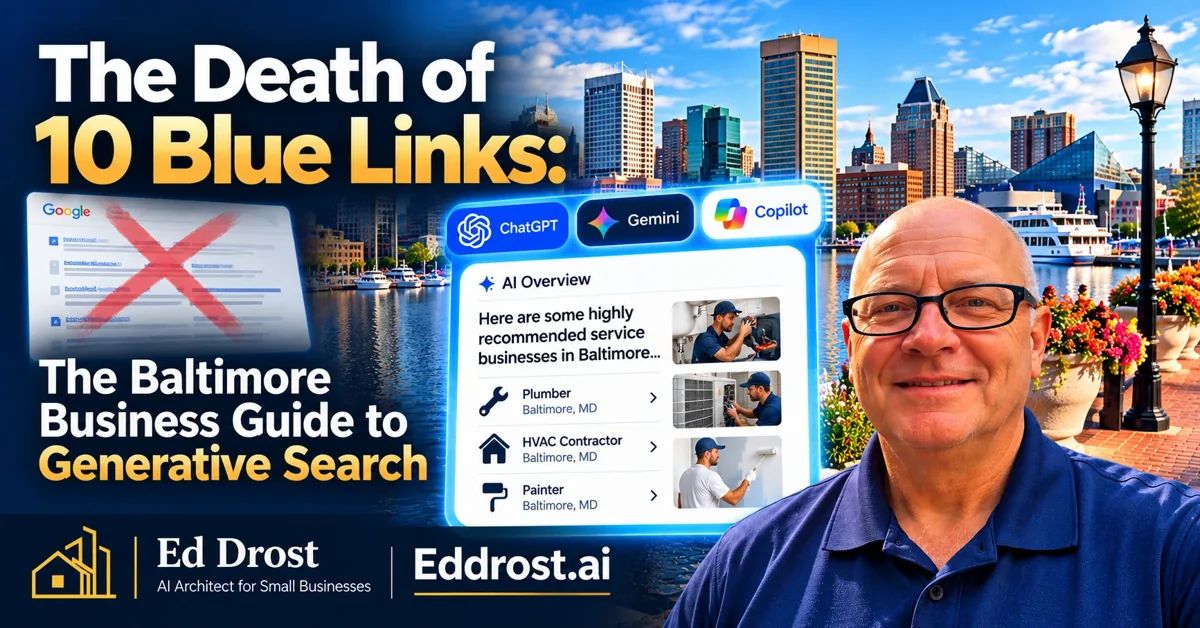
The ten blue links are not gone, but they are no longer the whole story. Generative search puts a written answer first, and your business either helps build that answer or gets skipped. Adapting means answering questions clearly, structuring your data, and building authority a machine can verify.
"Winning" here means being a source people and AI tools can trust. It does not mean controlling a ranking, because generative answers vary by tool, by query, and by day.
What Changed for Customers
Search used to hand people a list and let them dig. Now many searches return a synthesized answer, sometimes with a few cited sources, and the customer may never click through. This is often called zero-click search.
For a Baltimore business, that has two consequences:
- Fewer clicks can come from the same visibility. Some questions get answered on the results page.
- Being named or cited in the answer carries weight. A mention can build trust before the customer ever visits your site.
I have seen discovery change from the Yellow Pages to Google to maps and reviews since I started appraising in 1989. This is another step in that line, not the end of local business.
What Stays the Same
- Customers still choose businesses they trust.
- Real reviews, real credentials, and real results still matter.
- A good website is still your home base.
What Is Different
| Old goal | New goal |
|---|---|
| Rank high on a list | Be a clear, trusted source in the answer |
| Match a keyword | Answer the whole question |
| Get the click | Earn the mention, then the click |
| Optimize a page | Make the business itself understandable |
A Practical Adaptation Plan
1. Answer the question in the first sentence
Open each key page with a direct answer, then explain. This helps readers, and it gives AI tools a clean passage to use.
2. Add FAQ content, then add expert questions
Cover the common questions first. Then publish the Should-Ask Questions: the ones an experienced local pro knows customers need answered but wouldn't think to ask.
3. Use structured data
Add LocalBusiness, FAQPage, and Article schema so machines read your content correctly. Schema labels your information. It is not a guarantee of any result.
4. Build authority signals that can be checked
License numbers, years in business, named expertise, and links to official sources all help. Keep them consistent everywhere.
5. Measure what you can
Track Search Console impressions and clicks, run monthly query tests across AI tools, and ask new customers how they found you. Expect some searches to bring fewer clicks but better-informed customers.
Mistakes to Avoid
- Panicking and abandoning SEO. It remains the foundation.
- Keyword stuffing. It does not help and can hurt.
- Publishing generic AI-written pages. If it could describe any business in any city, skip it.
- Trusting guarantees from anyone who promises a placement.
Frequently Asked Questions
Is Google really changing that much?
Should I stop doing SEO?
What is the first thing I should do?
The Bottom Line
The list of links is giving way to the written answer. Businesses that explain themselves clearly, prove who they are, and share real local expertise are the ones with the best shot at being part of it.
Experience builds value. AI builds leverage.